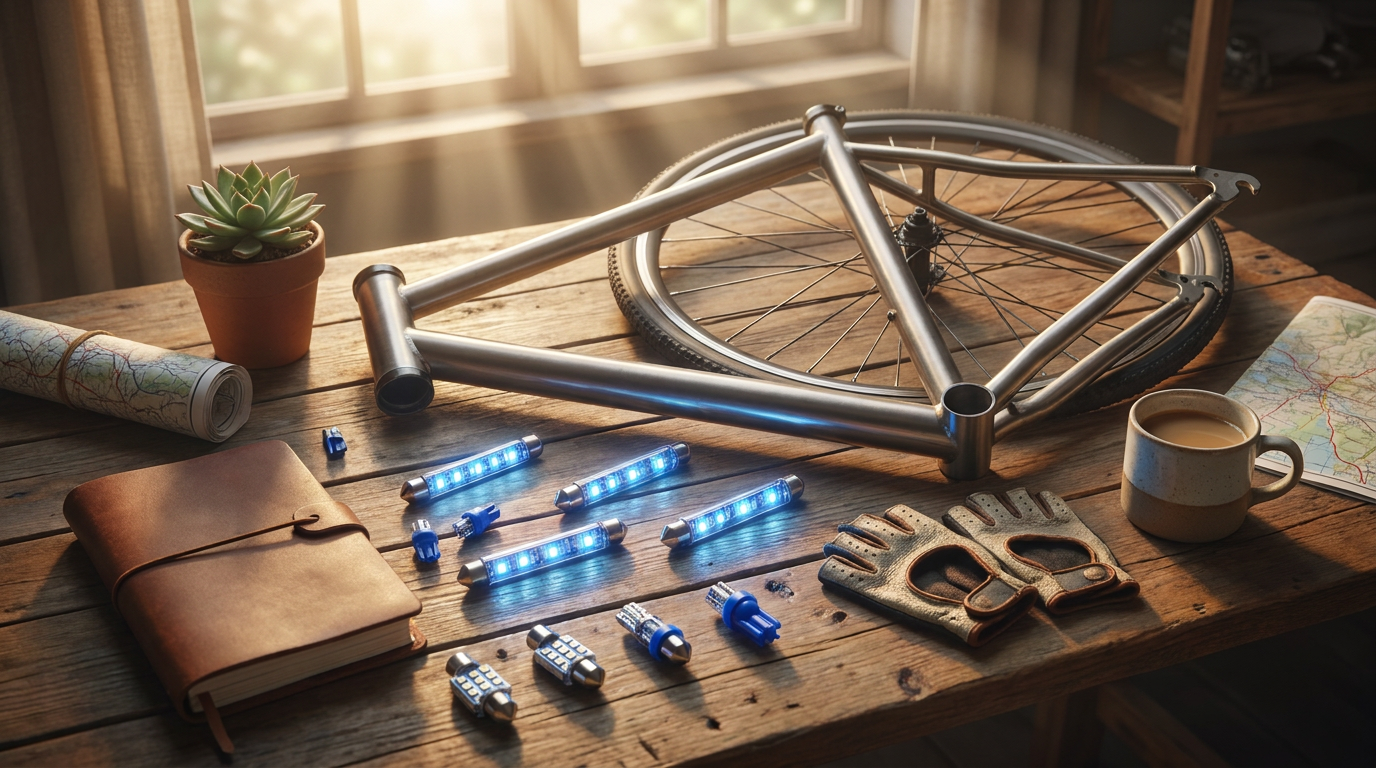
Choosing a Rideluminate Bicycle Frame Light Kit
 Sam VasquezBuying Guide Lead
July 23, 2026. This guide breaks down the essential factors when selecting a lighting system that mounts directly to your bike tubes. It is intended for daily commuters and recreational riders who need more lateral visibility than standard headlights provide.
The Problem with Standard Visibility
Most cyclists rely on the traditional front-and-rear lighting setup, but these systems leave a significant gap in side-profile visibility. When you are crossing an intersection, a standard headlight doesn't help a driver approaching from the left or right see you until you are directly in their path. According to Planet Bike, utilizing eye-catching tail lights and visible side lights is critical to help keep you riding safe during both day and night. While many riders look for cool bike accessories for adults to personalize their ride, the primary function of a frame-mounted kit should always be safety through 360-degree illumination.
In my experience, the market is split between high-performance systems and budget-friendly alternatives. For instance, Trek Bikes offers Bontrager light sets that focus on high-lumen output for the road ahead, but these don't typically wrap around the frame itself. If you are looking for a rechargeable bike frame lights setup, you have to decide if you want something that just marks your position or something that actually lights up the ground. Many riders mistakenly buy cheap battery-operated strings that fail after the first rain. If you're on a budget, you might be tempted by these unbranded strips, but the lack of weatherproofing usually makes them a one-season purchase. Skip this if you only ride in broad daylight on protected paths; frame kits are specifically for those of us sharing the road with vehicles in low-light conditions.
How Rideluminate Integrates with Your Frame
Photo by foad shariyati on Pexels
Rideluminate focuses on a balance between aesthetic appeal and rugged durability. Unlike the universal kits from ActionGlow, which are known for being bright and lightweight with a one-year warranty, Rideluminate is designed to follow the specific geometry of modern bicycle frames without interfering with cable routing or bottle cages. When we look at underglow for bicycles, the goal is often to create a 'halo' effect on the pavement. Rideluminate achieves this by using high-density LED strips that cast light downward and outward, effectively increasing the visual footprint of the bicycle.
Between these two, I’d go with a dedicated kit like ActionGlow or Rideluminate over a DIY solution. These kits are engineered to handle the vibrations of city streets and the occasional hop off a curb. If you are running a specialized setup, such as a motorized bike, you might consider a motorized bicycle light kit which can sometimes be integrated into the engine's electrical output, but for 99% of riders, a standalone battery-powered frame kit is the more reliable path. The Rideluminate system is built to be modular, meaning you can choose how much of the frame you want to cover based on your specific visibility needs. It bridges the gap between a standard bicycle frame light kit and a professional safety array.
Decision Framework for Your Next Kit
Photo by cottonbro studio on Pexels
When you are ready to pull the trigger on a kit, don't just look at the lumen count. Here’s what I’d actually buy based on real-world usage: a kit that offers at least eight hours of run time and features a quick-release battery pack. You don't want to be bringing your entire bike into your apartment just to charge it. Here is a checklist to use before you buy:
- Check the IPX rating: Ensure the kit is at least IPX4 water-resistant to handle unexpected rain.
- Mounting method: Look for 3M automotive-grade adhesive or heavy-duty UV-resistant zip ties; cheap rubber bands will snap.
- Battery type: Prioritize lithium-ion rechargeable packs over AA or AAA cells to save money and reduce waste.
- Weight distribution: Ensure the battery pack can be mounted low on the frame to keep your center of gravity stable.
- Color options: While RGB is fun, a steady white or amber light is often more effective for peripheral recognition by drivers.