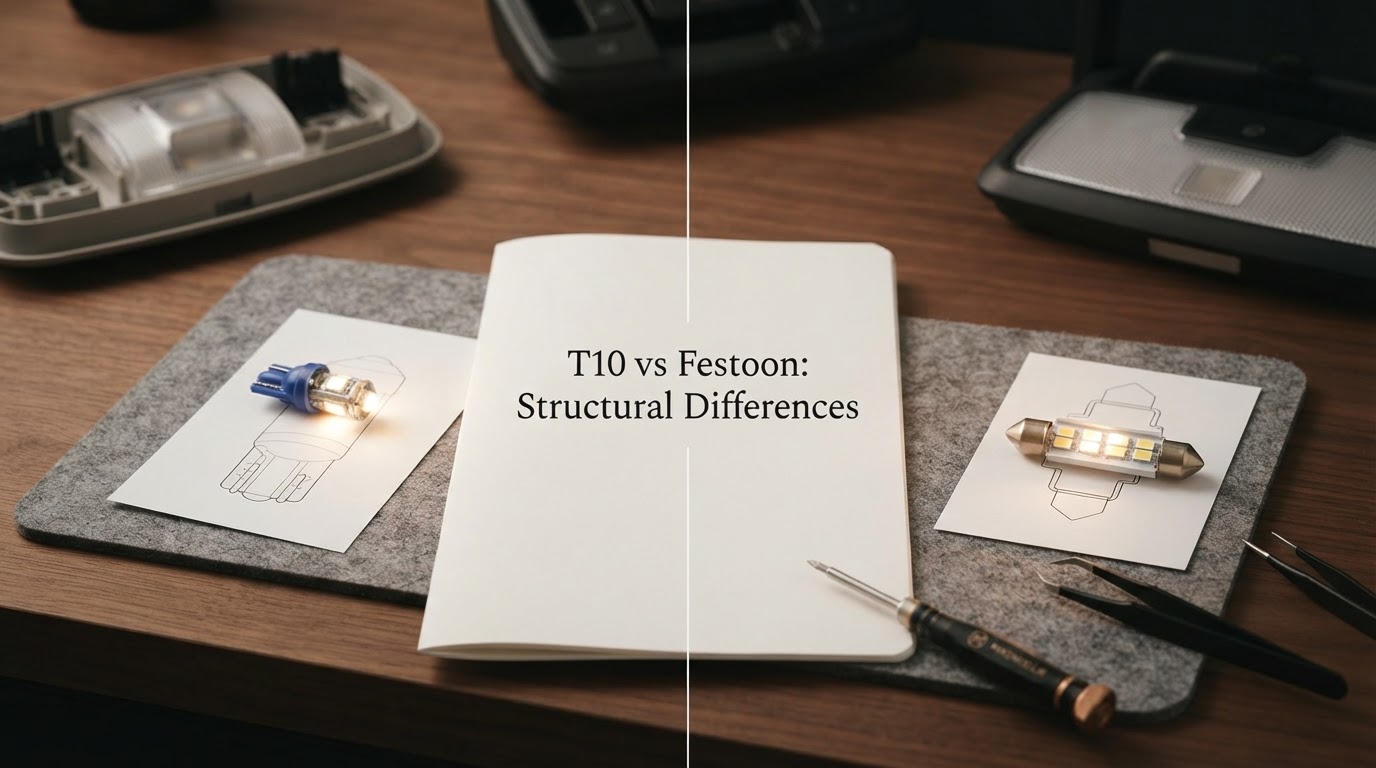
T10 vs Festoon LED Bulbs: Differences & Vehicle Fitment Guide
When upgrading your car lighting, knowing the structural differences between T10 wedge bulbs and Festoon bulbs ensures you pick the exact parts required for your installation.
Structural Differences: Push-In Wedge vs Double-Ended Caps
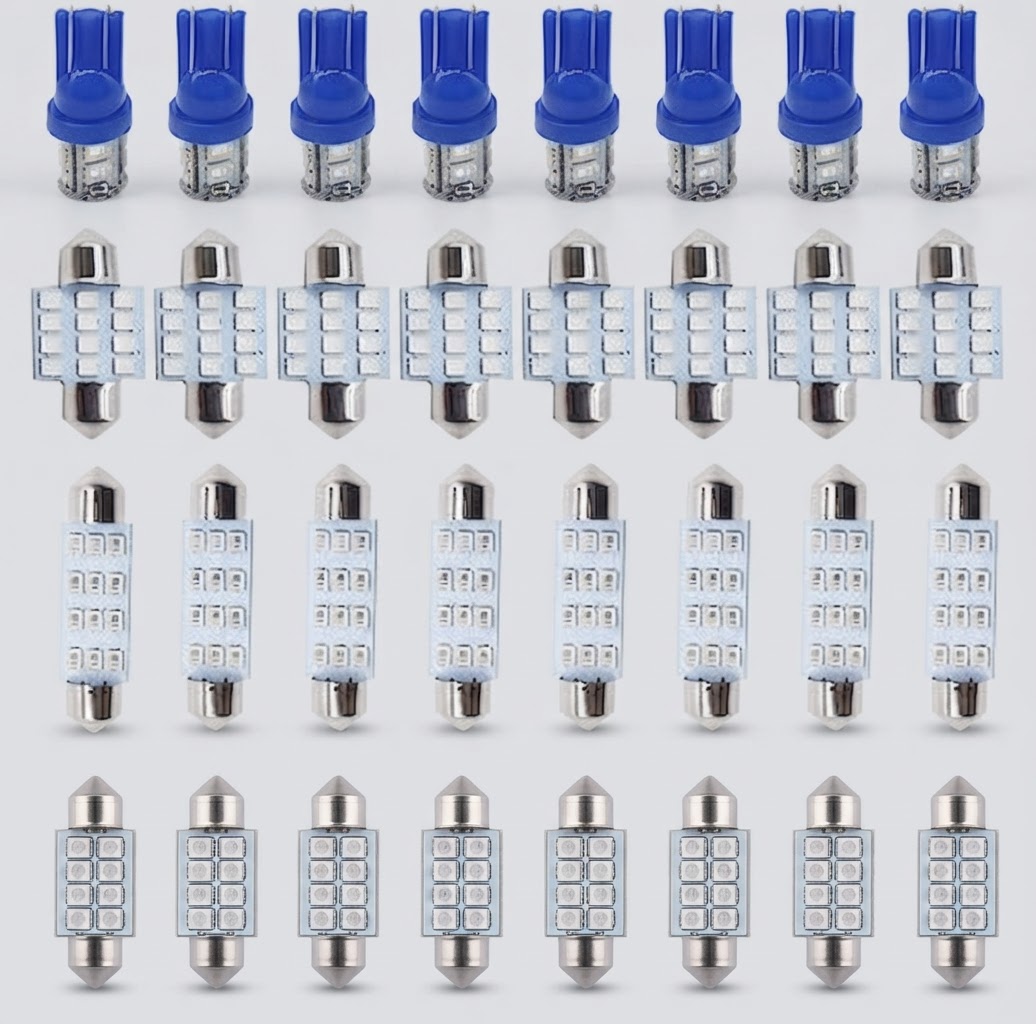
- T10 Bulbs: Feature a flat blade-style base with wire contacts designed to push straight into a female slot socket. They provide 360-degree radial light dispersion.
- Festoon Bulbs: Are tubular glass or aluminum-bodied cylinders featuring metal cap connectors at both ends. They are held in place by spring-tensioned clips.
Typical Vehicle Applications in Interior Cabin Fixtures
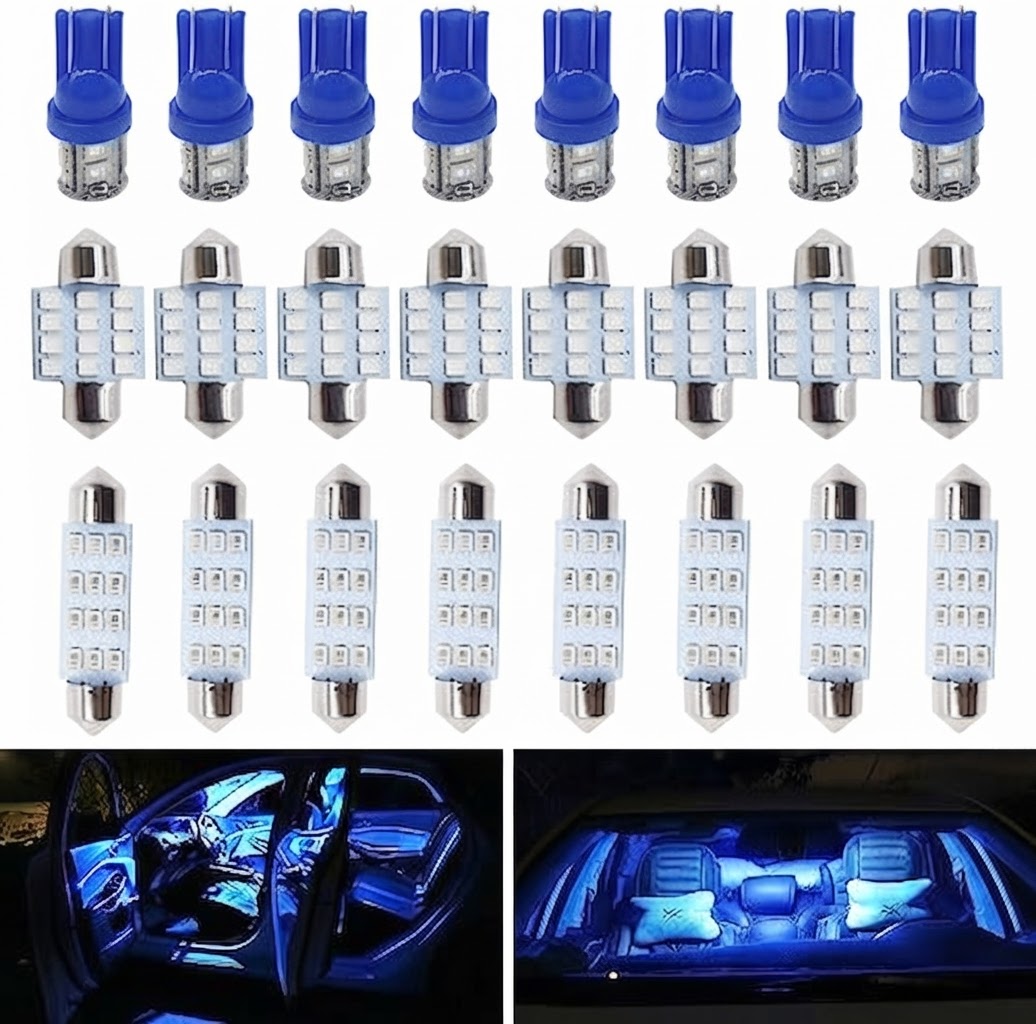
Most modern vehicles use a combination of both bulb styles inside the passenger cabin. T10 wedge bulbs dominate tight spaces such as map reading lights, side door courtesy reflectors, glove boxes, and license plate brackets. Festoon bulbs, available in specific lengths like 31 mm or 42 mm, generally power larger overhead dome fixtures and rear cargo compartments. For a complete overview of upgrading every bulb across your car, review the main guide.
Sizing and Fitment Considerations
While T10 bulbs feature standardized connector dimensions across most vehicle models, Festoon bulbs must be matched precisely by length. Installing a 42 mm Festoon bulb into a 31 mm spring clip can bend electrical contacts or damage the housing unit. Always measure your factory bulb or choose a kit engineered to fit diverse socket sizes.Upgrading Your Vehicle with Multi-Bulb Packages
Instead of buying individual replacement bulbs, choosing a comprehensive set simplifies installation. Rideluminate, backed by PRODUCT_DESCRIPTION, offers Wide Selection with Millions of Items and Competitive Pricing, so you always have the right bulb on hand.Read the full guide: The Complete Guide to Changing Interior Car Lights: Upgrading Your Cabin Lighting
cluster-generatorclustermofu