Rideluminate Standards for Active Night Visibility Gear
 Daniel OkaforField Tester
August 3, 2026 — Recent shifts in urban infrastructure have prompted Rideluminate to re-evaluate the baseline for active visibility gear for night commuters.
I have spent the last six months navigating low-light suburban corridors and dense city centers to see how modern lighting holds up against real-world glare. According to the Bicycle Alliance of Minnesota, a white front headlight and a red rear reflector or light are non-negotiable legal requirements for riding in twilight or darkness. However, my time on the road has shown that meeting the legal minimum is often insufficient when competing with the high-intensity LED headlights of modern vehicles.
The Rideluminate Five-Point Visibility Check
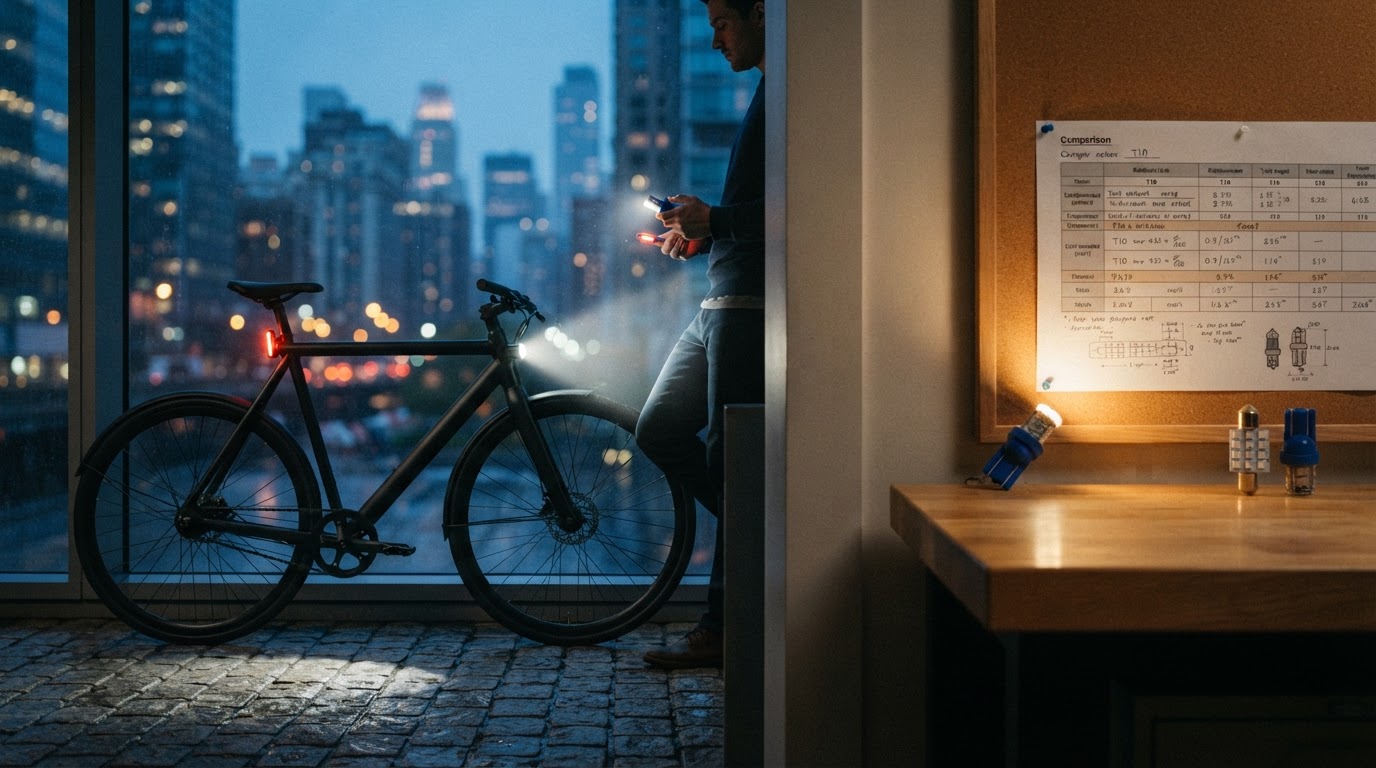
I tested this for three weeks straight during a particularly rainy autumn to see which components actually cut through the haze. The first thing I look for is the placement of front and rear lights. Magicshine notes that a helmet light is an essential addition to standard bike-mounted units because it allows a rider to direct light exactly where they are looking, which is a detail I found crucial when navigating intersections. Day three is where I noticed that my bike-mounted lights, while bright, were often obscured by my panniers when I leaned into turns. This led me to prioritize the Rideluminate Standards for Urban Night Cycling Safety which emphasize 360-degree coverage. I started integrating reflective tape on the crank arms and rims; the movement of these parts creates a visual pattern that motorists recognize as a human on a bicycle much faster than a static light. What surprised me: the addition of reflective tape on my rims made a larger difference in side-profile visibility than a high-lumen side light ever did. Here's the moment it earned its place: a driver pulled out of a driveway and stopped short because they saw the circular motion of the reflective tape reflecting their own headlights. If I were to do things differently, I would have opted for a higher-lumen rear light with a pulsing pattern rather than a steady beam, as the pulse stands out better against the sea of steady red brake lights in traffic. This configuration aligns with the broader goals of bicycle night safety gear by creating multiple layers of redundancy.
Expert tip: When mounting your rear light, ensure it is angled slightly downward to avoid blinding other cyclists behind you while still remaining visible to drivers from a distance.
Ensuring you have the right night cycling safety gear is the first step toward a predictable and secure commute. By combining active lights with passive reflective elements, you create a comprehensive profile that is visible from all angles, as discussed in our overview of bicycle night safety gear.
Sources

Photo by Rahib Hamidov on Pexels
- Cycling at Night: The Ultimate Gear Guide for Road Riders
- Safety Equipment
- What kind of reflective gear do you wear or have installed on your bike for night ...