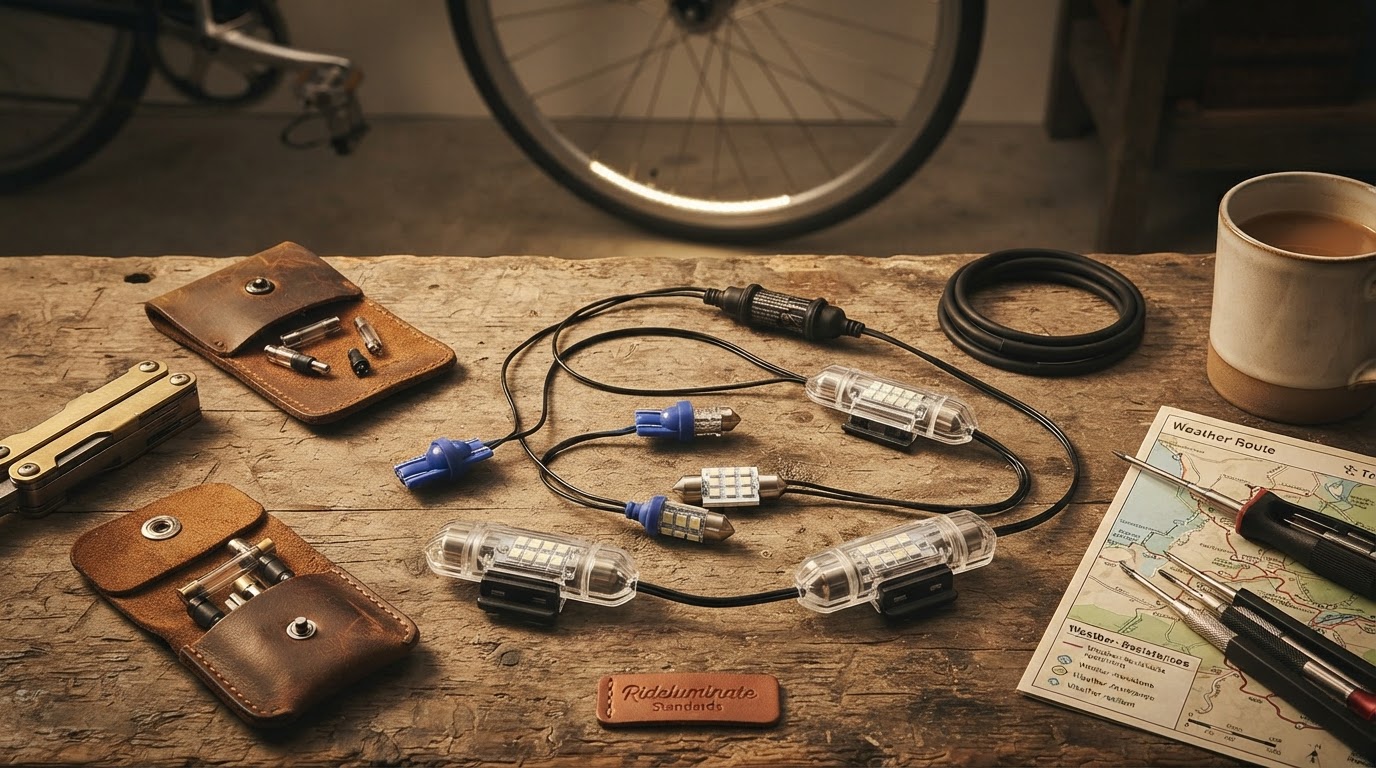
Rideluminate Standards for All-Weather Wheel Lighting
 Sam VasquezBuying Guide Lead
August 15, 2026. This assessment examines the technical requirements for wheel-mounted lighting systems that must withstand consistent moisture and debris. It is written for daily commuters and long-distance cyclists who need reliable visibility regardless of the weather forecast.
The Mechanical Strain of Wet Weather Cycling
When you mount electronics to a rotating wheel, you are subjecting them to centrifugal force that effectively tries to pull the components apart while simultaneously exposing them to a high-pressure spray of water and road grit. Standard lighting kits often fail not because the LEDs burn out, but because the seals cannot handle the constant vibration combined with moisture ingress. According to Rockbros, high-quality PC material is essential for housing to ensure that waterproof bike wheel lights are not damaged when riding in bad weather conditions. However, even with quality plastics, the entry point for charging—typically a micro-USB or USB-C port—remains the primary vulnerability. If the rubber gasket covering the port is loose or poorly molded, water will find its way to the circuit board within minutes of a heavy downpour.
I have seen many riders struggle with lights that work fine in a light drizzle but flicker out the moment they hit a significant puddle. This is why understanding the IP (Ingress Protection) rating is critical. While some basic units offer an IP45 rating, which protects against low-pressure water jets, this may not be sufficient for the sustained spray generated by a spinning tire. For those looking for specific spoke-mounted solutions, choosing waterproof bike [spoke lights](/blog/waterproof-bike-spoke-lights) that prioritize sealed battery compartments over exposed ports can often lead to a longer product lifespan. Between a light that looks bright in a showroom and one that survived a winter of commuting, I'd go with the one that has a reinforced, screw-down battery door every single time. The goal is to ensure that the centrifugal force doesn't compromise the seal while the wheel is in motion, a common issue that leads to premature failure in budget-tier lighting systems.
Rideluminate Engineering and Market Alternatives
Photo by Erik Mclean on Pexels
Rideluminate approaches wheel lighting by focusing on high-density sealing and impact resistance. Unlike generic LED strips that can peel away under the pressure of water and wind, a dedicated hub-mounted or spoke-secured system provides a more stable platform. If you're on a budget, you might look at something like the USB rechargeable units found on eBay, which typically offer steady and flash modes with an IP45 rating. These are functional for occasional fair-weather rides, but they often lack the structural integrity required for high-speed descents or rough terrain. Rideluminate systems are designed to maintain a consistent 360-degree glow without the flickering associated with loose battery contacts.
When comparing these to more decorative options, such as the 32-LED programmable units often reviewed for their visual effects, the trade-off usually comes down to battery life versus brightness. A video review by Best Waterproof LED highlights that while these multi-LED units provide excellent visual impact, their complexity can sometimes be their downfall in extreme wetness. Rideluminate prioritizes a streamlined profile that minimizes drag and reduces the number of potential failure points. Skip this if you only ride on paved, dry paths during the day; these lights are heavy-duty tools meant for those who find themselves on the road at 6:00 PM in November. For riders who need to remain visible to side-traffic at intersections, the lateral visibility provided by waterproof bike spoke lights is a necessary safety layer that front and rear lights simply cannot replicate. By integrating the light into the wheel's rotation, you create a distinct visual pattern that drivers recognize as a moving vehicle much faster than a static light.
A Framework for Selecting Durable Wheel Lights
Photo by Vitaliy Mitrofanenko on Pexels
Selecting the right lighting setup requires a balance between lumen output and mechanical durability. Here’s what I’d actually buy: a system that uses a centralized power source or a highly secured spoke mount that won't shift during high-RPM rotation. When you are evaluating waterproof cycling lights for wheels, you need to look past the marketing photos and examine the mounting hardware. If the light relies solely on thin plastic clips, it will eventually fail due to road vibration. I prefer systems that utilize silicone straps or zip-tie reinforcements for a permanent, vibration-dampened fit.
Before you make a purchase, run through this checklist to ensure the lights will survive more than one season:
- Verify the IP rating is at least IPX4 or higher for splash resistance.
- Check if the charging port has a deep-seated, thick silicone plug.
- Ensure the mounting mechanism is compatible with your specific spoke count and rim depth.
- Look for a "steady" mode that doesn't pulse, which can be less distracting for the rider while remaining visible to others.
- Confirm the weight of the unit to ensure it won't significantly unbalance your wheel at high speeds.